Environmental Impact Monitoring Management System
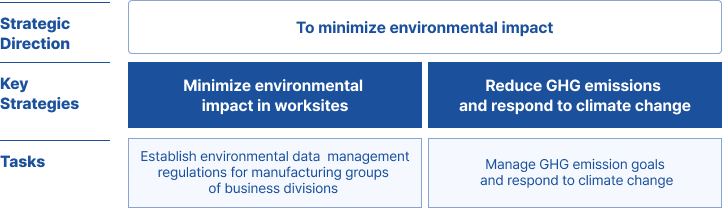
Under the environmental impact monitoring management system, Daejoo Electronic Materials systematically controls environmental impacts that can occur in the course of business activities. Environmental data are collected on a regular basis from the Environment Team of the SHE Group and comprehensively analyzed and reported to the ESG Committee. The ESG Committee identifies environmental risks in advance, reviews potential environmental issues, and reports them to the BOD for approval of the report. The directors of each manufacturing group carefully review environment-related data and continuously improve our environmental performances by developing improvement plans through consultation with the field. At the same time, Daejoo Electronic Materials continuously develops a company-wide environmental management system while maintaining a higher standard that exceeds the level of legal compliance.
Environmental Management System
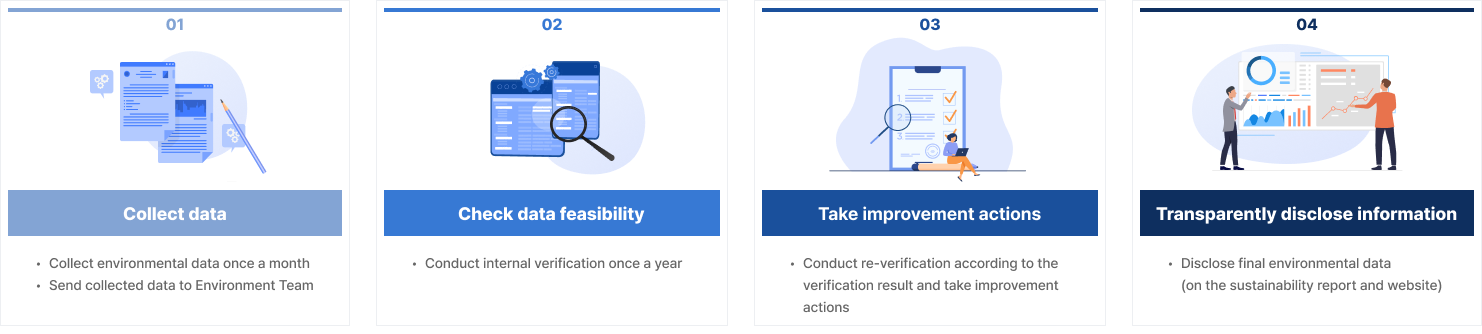
Environmental Impact Data Management Method
Daejoo Electronic Materials operates an elaborately established data management process to secure the reliability and accuracy of environmental impact data. Following company-wide data collection on a monthly basis, we review the data together with an external expert. Data feasibility is also inspected twice a year. Each year, we establish data management and supplementation plans and strive to keep environmental impacts to a minimum. In addition, data from each business division are integrated and managed at a company-wide level, with swift improvement actions taken for areas displaying insufficiencies in comparison to the goals. Through this approach, we continuously monitor environmental impacts and strive to produce performances that surpass the legal requirements. We also plan to strengthen transparent information disclosure and active communication with stakeholders.
Management of Pollutants and Hazardous Substances
Air Pollutant Control
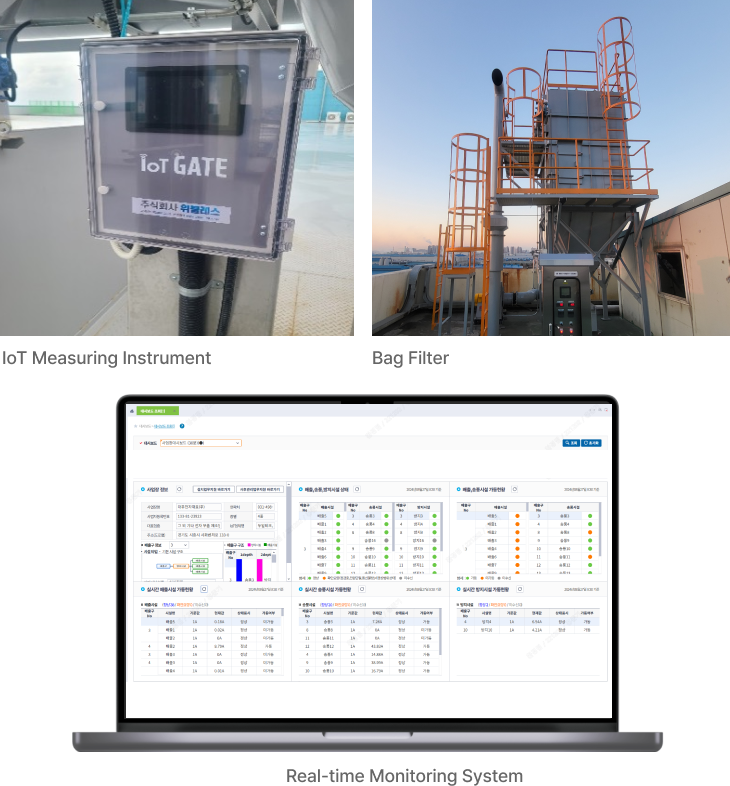
To minimize the negative environmental impacts caused by air pollutants, Daejoo Electronic Materials measures and controls air pollutant emissions according to related statutes. In particular, by introducing the small-scale air emission facility control system (IoT (Internet of Things) system), we monitor the operating status of the air pollutant emission and prevention facilities in real time and inspect whether or not the facilities are being operated appropriately.
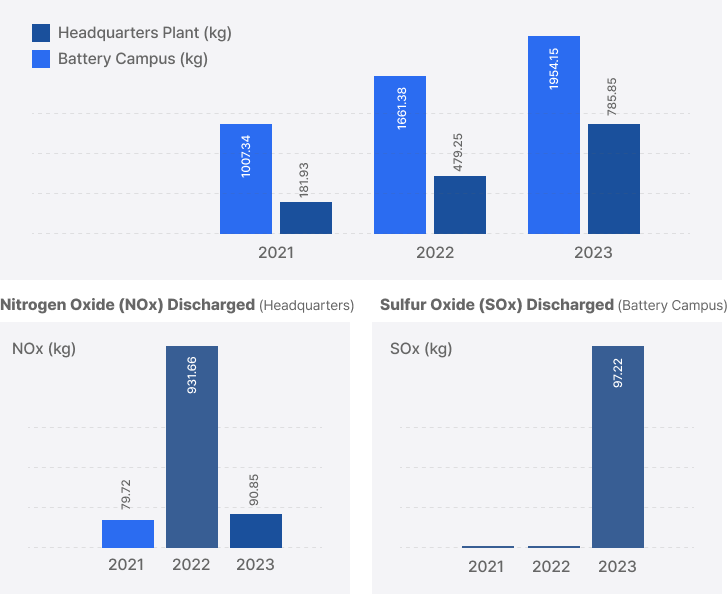
Particulate Matter (PM) Discharged (Headquarters, Battery Campus)
Waste Generation and Significant Waste-related Impacts
Management of Significant Waste-related Impacts
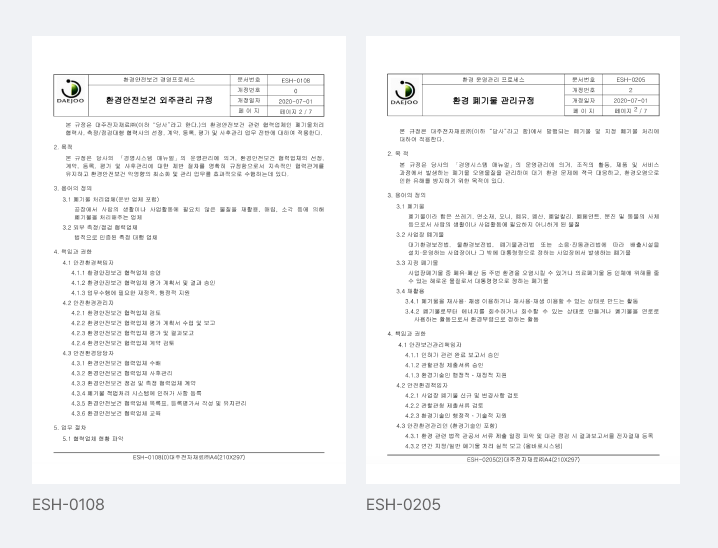
Daejoo Electronic Materials monitors the water discharge, transport and treatment process by registering all wastes generated in the Allbaro system. In addition, according to our internal regulations (*ESH-0108), we conduct the initial supplier assessment when entering into a contract with an outsourcing supplier followed by regular assessments at least once a year. In doing so, we maintain and improve the environmental management standards of our suppliers by continuously monitoring their compliance with the contractual and legal obligations.
*ESH-0108: Regulations for SHE management through outsourcing
Waste Generation and Significant Waste-related Impacts
According to the internal regulations (*ESH-0205), Daejoo Electronic Materials separately discharges wastes according to their types and characteristics to prevent secondary pollution caused by the mixing of wastes. Some wastes are reused in the production of cover soil, recovered fuel, etc. through consignment to a general waste recycling company so as to reduce environmental load and promote the reuse of resources. In addition, we operate separate storage facilities according to waste characteristics to minimize environmental pollution by preventing the inflow of rainwater and leak of leachate.
*ESH-0205: Regulations for environmental management and waste control
Secondary Pollution Prevention
Daejoo Electronic Materials categorizes wastes into solvents, wastewater sludge, etc. and separately treats the wastes as liquid, solid, and other wastes according to their characteristics. This takes place through the processes below.
Separate Discharge of Wastes: The wastes of different types are separately discharged to prevent mixing. In this process, waste recyclability is increased, and resource circulation is maximized.
Improved Recyclability: Separately discharged wastes are controlled as resources for reuse. This consequently minimizes the necessity of waste treatment methods such as high-temperature incineration. This process contributes to easing the environmental load generated in the course of waste treatment.
Daejoo Electronic Materials is introducing various preventive measures to prevent the leak of leachate.
Curbing Installation: To prevent leachate leaks in advance, we have installed curbings in the waste storage and treatment areas. The curbings minimize soil and water pollution that can occur in the process of waste treatment.
Installation of Bulkheads and Introduction of Indoor Structure: Daejoo Electronic Materials installed bulkheads within the waste control facility to divide the area according to different types of wastes. In addition, we designed the waste storage and treatment facilities as indoor structures to prevent the diffusion of pollutants—which frequently occurs outdoors—and lower the likelihood of leachate generation.
Management of Water Discharge-related Impacts
According to the internal regulations (*ESH-0102), Daejoo Electronic Materials reviews regulatory amendments once a year and checks the changes in water quality criteria for discharged water accordingly. In addition, we conduct a management review (*QEP-0101) once a year based on the internal and external environmental issues (ESG-0105) and environmental impact assessment data to identify areas requiring improvement and set new management goals.
*ESH-0102: Regulations for assessment of compliance with the SHE regulations / ESH-0105: Regulations for SHE-related communication and information provision/ ESG-0101: Regulations for the control of management review
Interaction with Water as Shared Resource - Water Pollution Control
Daejoo Electronic Materials is supplied with water resources from Hangang River (Paldang Dam) as the water source through Siheung Purification Plant.
The amount of water resource use by the headquarters and plant is relatively larger. Therefore, industrial water is converted to purified water through a purification facility (80m³/day). In addition, solid wastes are separated from wastewater through an evaporator (0.42 tons/hr) to reduce pollution loads discharged to the water system. According to the internal regulations (ESH-0203), we control the quality of discharged water based on our internal criterion (90% of legal criterion) that is stricter than the legal criterion. Moreover, we conduct monitoring on a regular basis by analyzing the discharged water once every two months. As specified in the internal regulations for SHE communication and information provision (ESG-0105), we collect internal and external issues and address environmental issues by cooperating with stakeholders. Moreover, according to the internal regulations for environmental impact assessment management (ESH-0201), we conduct environmental risk assessment and inspection once every three years and establish and manage related goals.
Daejoo Electronic Materials monitors the water stress index in areas where the worksites are located. Currently, the water stress index in areas where our headquarters and Battery Campus are located is approximately 10 to 20% (low to medium).
Wastewater Treatment to Realize Sustainable Management
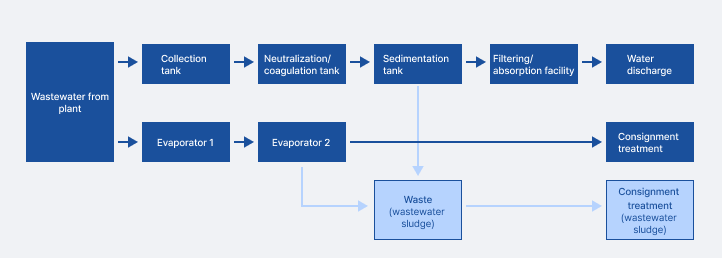
Daejoo Electronic Materials minimizes the negative environmental impact through the wastewater treatment process. Wastewater generated from internal processes is collected in the collection tank and passed on to the neutralization/coagulation tank where pH adjuster and polymer emulsion are added to form sludge. Then, after the treated water is separated from sludge in the sedimentation tank, the water is additionally treated in the filtering/adsorption facility before it is discharged according to the legal standards. The sludge sediment is processed into cake form using a filter press and treated as waste. For some wastewater from internal processes, the wastewater sludge and treated water are separated using the evaporator. Then, the treated water is handled by a professional water treatment company through consignment, and the wastewater sludge is treated as waste.
Wastewater Treatment Process
Control of Hazardous Substances
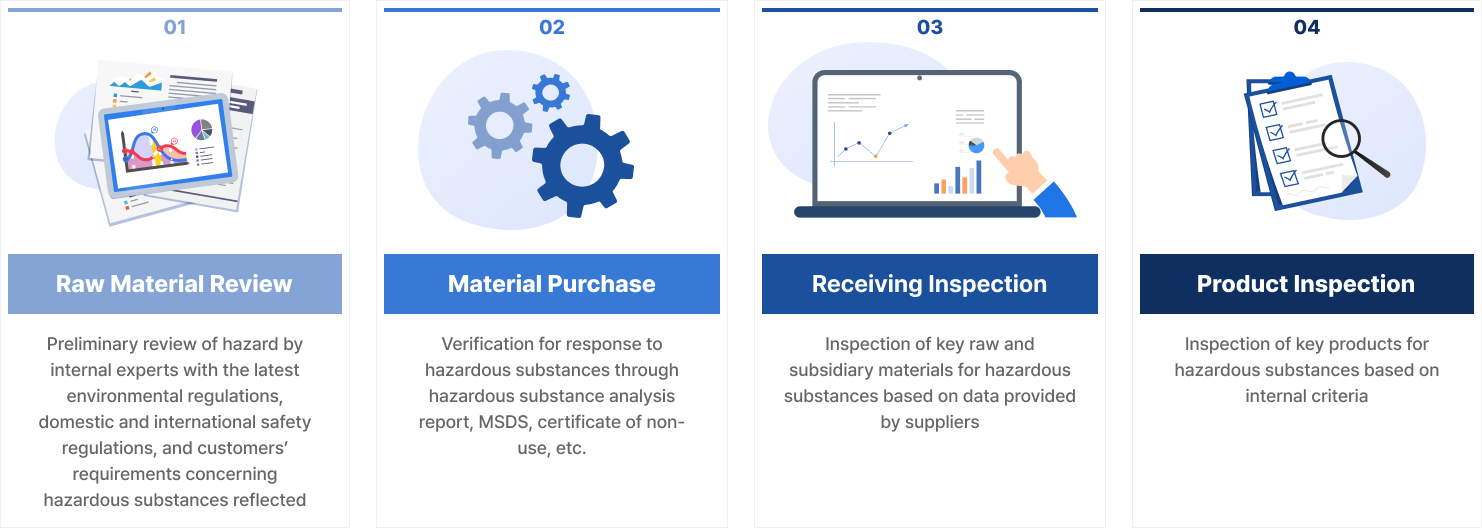
Daejoo Electronic Materials complies with the environmental regulations for product manufacturing throughout the process from product development and material purchase to manufacturing and delivery. We also organize internal and external training sessions on a regular basis to promote the importance of environment. In addition, Daejoo Electronic Materials manages information on the chemicals used in the raw and subsidiary materials through databasing, and verifies the validity of the data through the certificate of non-use, MSDS, third-party analysis, etc.
Hazardous Substance Control Process
Environmental Impact Reduction
Environmental Impact Assessment
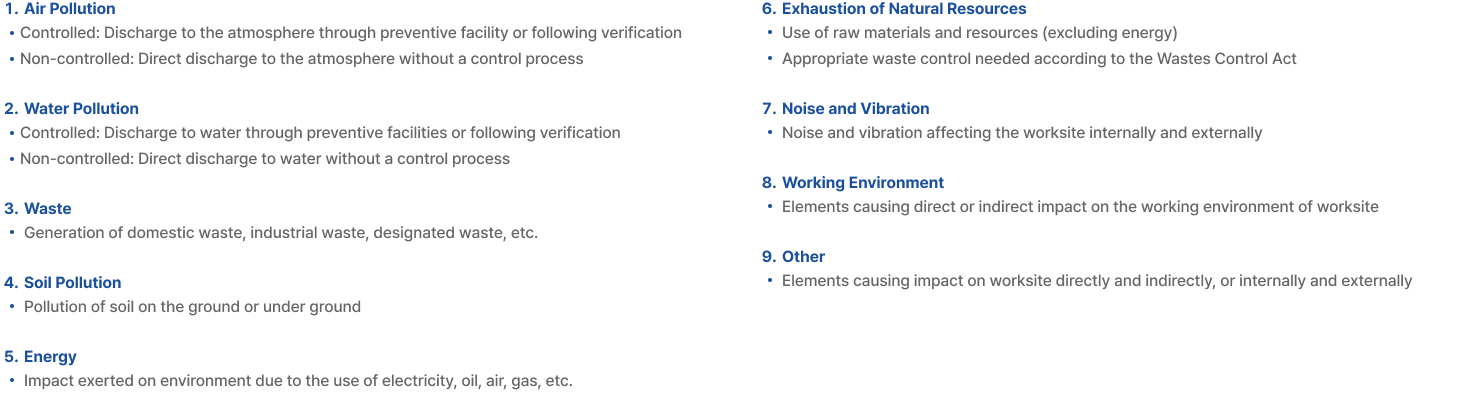
Daejoo Electronic Materials conducts environmental risk monitoring by inspecting the details of environmental impact assessment management regulations once every three years. The environmental impact assessment is conducted in relation to the elements of our activities in worksites that directly and indirectly affect the environment including air pollution, water pollution, waste generation, soil pollution, energy consumption, depletion of natural resources, noise and vibration, and working environment. The assessment results are recorded by the head of each division using the environmental impact assessment form. Factors causing significant environmental impacts are registered in the environmental impact register and controlled in accordance with the goals and plans.
In addition to the scheduled impact assessment, we conduct assessments whenever the necessity arises in relation to the six categories (establishment and amendment of statutes and other requirements, building extension and remodeling, new product development, facility change, stakeholder demand, when deemed necessary).
Environmental Impact Assessment Categories
Ecosystem Preservation
Habitat Protection for Biodiversity Preservation
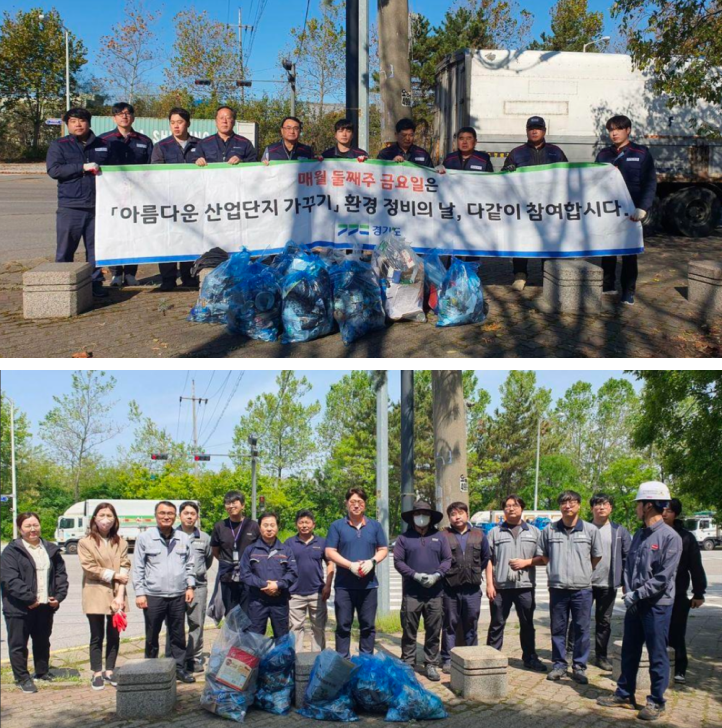
Daejoo Electronic Materials is located in a national industrial complex where the value of biodiversity is not high. Recognizing the importance of biodiversity preservation, however, we conduct a range of activities on an ongoing basis. Aside from striving to improve the surrounding environment of the industrial complex and minimize the loss of natural habitats, we carry out environmental purification activities targeting rivers and streams and public facilities by cooperating with the tenant companies of Sihwa Industrial Complex. By conducting such activities, we contribute to protecting the environment and preserving biodiversity in the local community and fulfill our social responsibilities for sustainable development.
Regional Ecosystem Protection: Daejoo Electronic Materials carries out environmental protection and nature restoration activities for natural habitats around the worksites. We aim to guarantee the survival of various species, maintain the health of the natural habitats, and ultimately improve biodiversity in the region.
Environmental Training and Awareness Improvement: Recognizing the importance of biodiversity, Daejoo Electronic Materials strives to spread the importance of ecosystem protection by providing environmental training to employees and local residents. The training programs encourage citizens’ participation in local ecosystem protection and contribute to spreading the value of biodiversity preservation.
Cooperation and Partnership: Daejoo Electronic Materials implements the biodiversity preservation project through cooperation with the local government and an environmental protection group. This cooperation serves as an important element for the long-term preservation of the local ecosystem. Based on close cooperation with the local community, we produce substantial environmental protection performances.
Environmental Purification Activity - Creating Beautiful Industrial Complex